
 Let's Chat
From Mindset to Action
In today’s VUCA workplaces (volatile, uncertain, complex, ambiguous), maintaining influence without burning out is critical. This post shows how quiet competence becomes actionable when paired with a feedback framework R2C2, using burnout profiles as a leadership guide.
Our January blog on R2C2 was one of our most-read posts this year, with over 200 LinkedIn interactions. Social proof, like Renata’s post and Chidera’s reflections, demonstrates that structured feedback resonates with professionals seeking practical ways to influence while reducing stress. Here, you’ll learn how to:
- Maintain influence under pressure
- Rebuild trust with colleagues
- Support teams through stress, miscommunication, or multigenerational dynamics
1. Mindset - Practicing Quiet Competence
Influence isn’t just about doing your job well, it’s how you show up. Quiet competence is a deliberate approach: working reliably, communicating thoughtfully, and guiding others with empathy. Psychologically, it aligns with Self-Determination Theory (SDT), emphasizing competence as a foundation for motivation, engagement, and resilient performance.
Ask yourself:
- Am I reliable? Do I consistently deliver high-quality work on time?
- Am I communicating strategically? Do I ask thoughtful questions and clarify expectations?
- Am I guiding with empathy? Do I offer feedback that supports others without triggering defensiveness?
If the answer is “yes” most of the time, you’re practicing quiet competence. This mindset builds credibility, trust, and sustainable influence.
2. Guide - Understanding Burnout Profiles from a Leadership Lens
Previously, we explored individual burnout in “Which Burnout Profile Are You?”. Here, the focus shifts to leadership. Your role isn’t to diagnose but to observe patterns in communication and performance so you can guide effectively. Recognizing burnout profiles allows you to apply quiet competence intentionally.
Observe communication and behavioural cues:
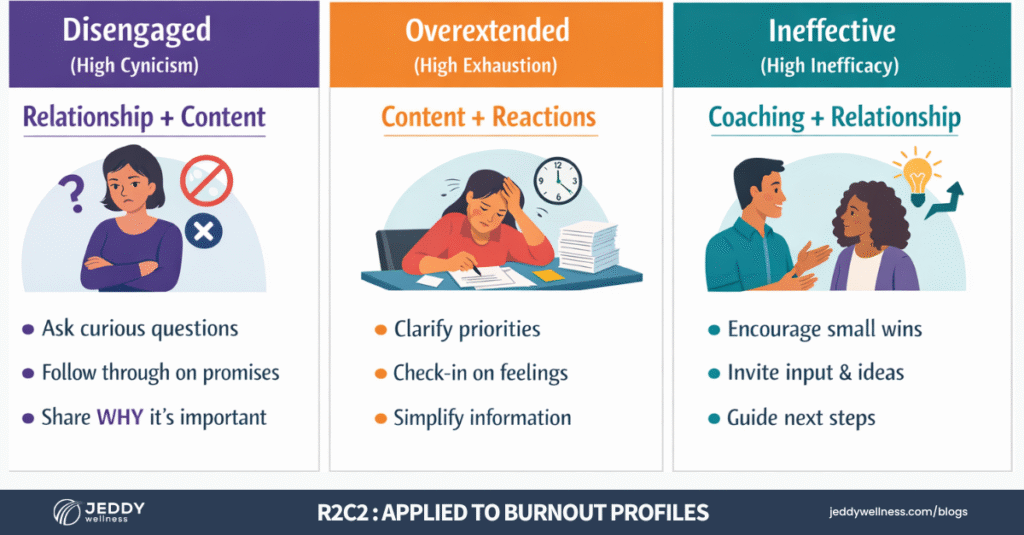
- Disengaged (High Cynicism): Skeptical tone, avoids collaboration, questions relevance
- Overextended (High Exhaustion): Rushed communication, unclear messages, missed cues
- Ineffective (High Inefficacy): Hesitant contributions, avoids sharing ideas, reduced confidence
Even small signs, missed details, hesitation, can ripple through teams. Observing patterns early allows leaders to respond thoughtfully instead of reacting emotionally.
3. How - Applying R2C2 Structured Feedback
R2C2 is more than a feedback method, it’s a tool for wellbeing, trust, and connection. It helps leaders put quiet competence into action under stress.Its four steps are:
- Relationship: Build trust. Start by connecting as humans.
- Reactions: Ask how the feedback feels. Listen without judgment.
- Content: Share observations aligned with goals.
- Coaching: Turn feedback into action with small goals and support.
Each burnout profile benefits from specific R2C2 emphasis:
- Disengaged (High Cynicism): Relationship + Content
- Overextended (High Exhaustion): Content + Reactions
- Ineffective (High Inefficacy): Coaching + Relationship
This is the leadership shift.
Instead of asking, “How do I fix myself?” You’re asking, “How do I guide this conversation in a way that restores trust, clarity, and confidence?”
That is quiet competence in action.
Conclusion: Mindset + How + Guide
- Mindset: Quiet competence enables intentional, reliable, empathetic influence
- Guide: Burnout profiles help recognize stress patterns and respond effectively
- How: R2C2 provides a structured, safe feedback method to rebuild trust and maintain alignment
Re-skill in Action: Join Our March 26 Live Workshop
We brought back R2C2 because structured feedback restores connection, trust, and clarity, even when teams are stressed or misaligned.
Join Sumana Jeddy and Hannah Nease on March 26 for a live, hands-on workshop . This 60-minute, evidence-based session is sliding-scale and practical, giving you strategies you can start using immediately to influence effectively without burning out.
Stop Scrolling, Keep Learning
For more practical guidance and insights:
Written By: Sumana Jeddy Published on 2026/03/01
______________________________
Stay Connected with Jeddy Wellness
Discover evidence-based research and innovative strategies to build and activate healthier workplaces.