
 Let's Chat
Reactive at Work
Ever feel like your day is just putting out fires? That no matter how hard you work, you’re constantly reacting instead of owning your work? You’re not alone and it might be a sign that your demands are higher than the control you have over your work.
This spring is the perfect time to take a step back, do a quick audit, and start reclaiming autonomy over your work.
Understanding the Job Demands-Control Model
The Job Demands-Control (JD-C) model explains how workplace stress develops:
- Job Demands: Your workload, deadlines, emotional labor, or role conflicts.
- Job Control (Decision Latitude): How much say you have over how and when you complete your work.
When demands are high but control is low, it’s easy to get stuck in reactive mode, just putting out fires all day. The JD-C model shows that increasing control, even in small ways, can help reduce stress, prevent burnout, and help you take ownership of your work.
Recap Burnout Profiles and Drivers
Burnout shows up differently depending on your situation. Last quarter, we shared three main profiles:
- Overextended: Feeling stretched thin by too many demands.
- Ineffective: Feeling unable to meet expectations or make an impact.
- Disengaged: Feeling disconnected or detached from work.
Common drivers of burnout include:
- Workload pressures
- Lack of control or autonomy
- Role ambiguity
- Insufficient rewards or recognition
- Poor community or social support
- Misalignment of values or expectations
A lack of autonomy is a key factor: when you don’t control your tasks, methods, or priorities, even a manageable workload can feel overwhelming.
3 Evidence-Based Strategies to Reclaim Control
These three strategies tie directly back to the JD-C model, they help you increase control, balance demands, and move from reactive to proactive work.
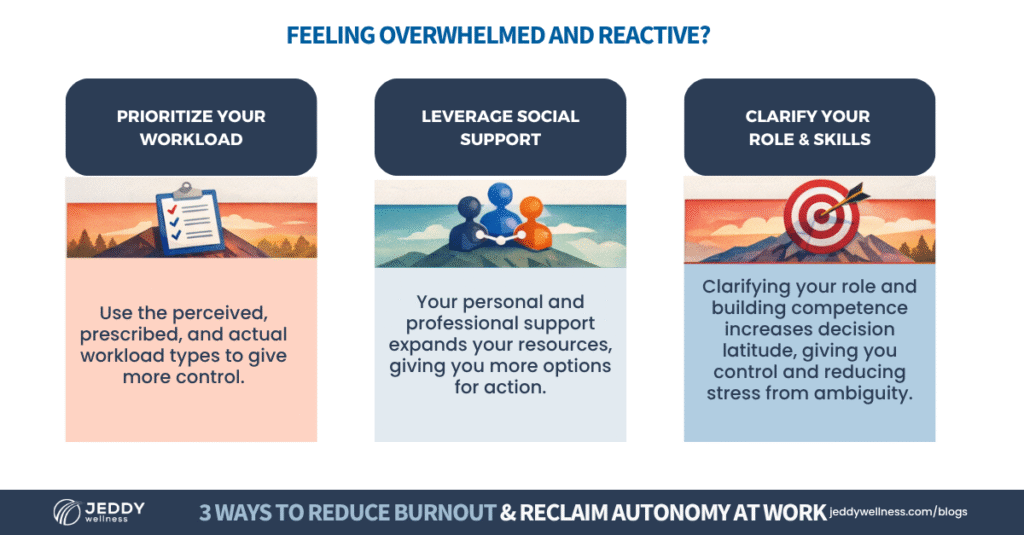
1. Prioritize Your Workload
Deadlines, emails, and competing projects can leave you feeling overextended.
Action steps:
- Use the perceived, prescribed, and actual workload types to focus on what matters most. Read the workload blog or watch/listen our Senior Workplace Wellness Strategist, Hannah Nease, explain them.
After this quick audit, you’ll know which tasks truly require your attention and which can be delegated, delayed, or deprioritized.
JD-C tie-in: Prioritizing tasks gives you more control over what you focus on, helping reduce the feeling of being overwhelmed.
2. Leverage Support
Feeling like you’re on your own increases stress and emotional load. Social support can act as a resource to help you regain control.
Action steps:
- Take stock of support available to you. Think about who can help you, both personally and professionally, managers, mentors, teammates. Recognize that support comes in two forms:
Perceived Support: Knowing that people are there for you when needed (e.g., supportive leadership, cohesive team, flexible work arrangements). This belief helps reduce stress before problems arise.
Received Support: The actual help you get when challenges appear (e.g., guidance from a manager, peer collaboration, practical assistance). This helps manage stress in real time.
JD-C tie-in: Leveraging support expands your resources, making high demands more manageable and giving you more options for action.
3. Clarify Your Role and Build Your Skills
Feeling reactive often comes from unclear expectations or not feeling fully prepared.
Action steps:
- Define your role: Write down your key responsibilities, the decisions you can make, and the outcomes you’re accountable for.
- After this step, you’ll clearly see what’s expected of you and where you have control.
- Build your skills: Identify gaps in your knowledge or abilities, then take practical steps to improve, training, mentoring, or using team resources.
- After this step, you’ll feel more confident handling your work and able to take initiative instead of just reacting.
JD-C tie-in: Clarifying your role and building competence increases decision latitude, giving you control and reducing stress from ambiguity.
Takeaway
This spring, pick one strategy to implement this month, whether it’s prioritizing your workload, leveraging support, or clarifying your role. Small, actionable changes like these can help you move from reactive to proactive, reduce burnout, and reclaim control of your workday.
Stop Scrolling, Keep Learning
For more practical guidance and insights:
Written By: Sumana Jeddy Published on 2026/04/01
______________________________
Stay Connected with Jeddy Wellness
Discover evidence-based research and innovative strategies to build and activate healthier workplaces.